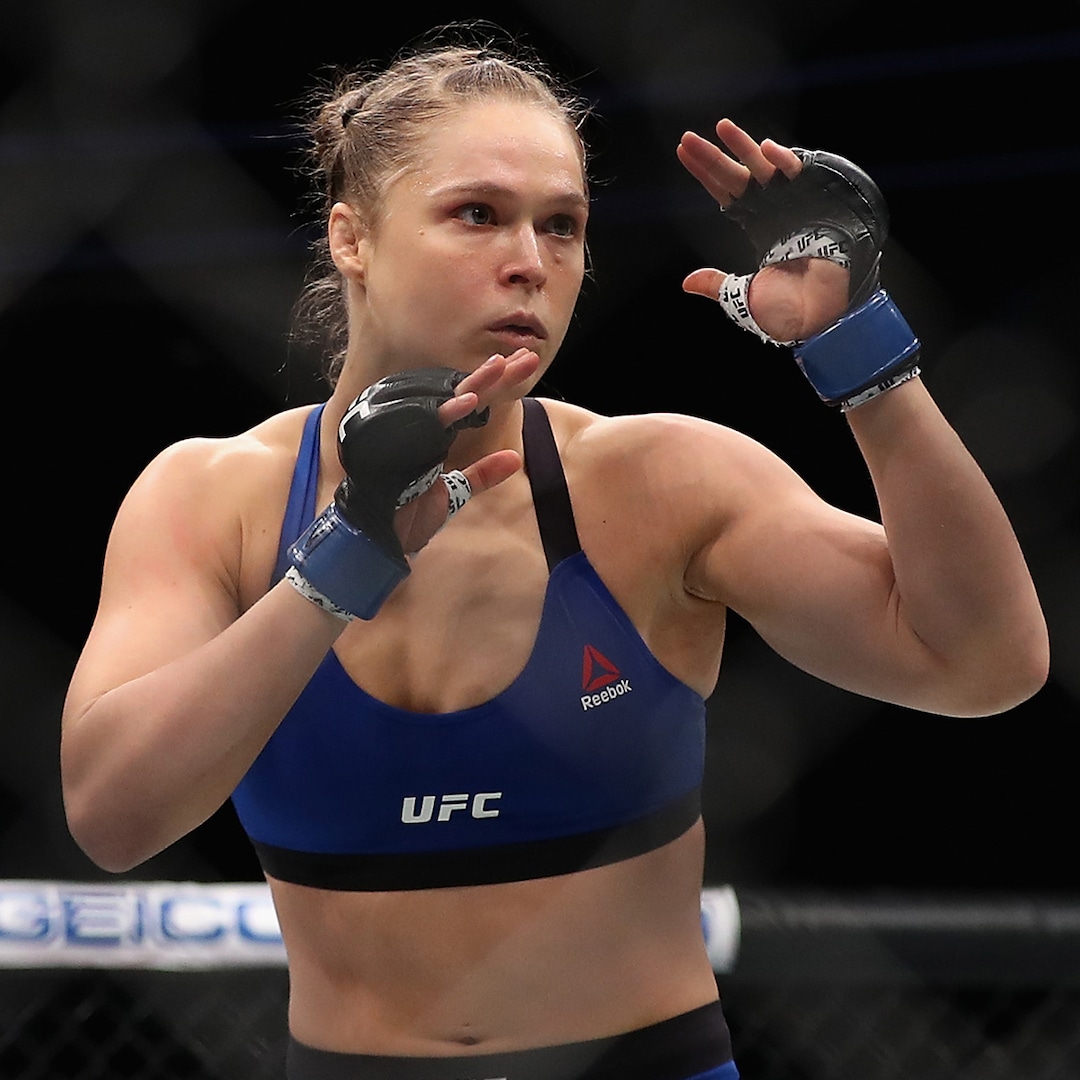
Beyond the Ring: Ronda Rousey's Impact on Gender Perceptions in Combat Sports
Ronda Rousey, a name synonymous with dominance and breaking barriers, has undeniably reshaped the landscape of combat sports. From the brutal efficiency of her UFC octagon appearances to the theatrical grandeur of her WWE tenure, every
Ronda Rousey fight has been more than just a contest of strength and skill; it has been a public discourse on gender roles, athleticism, and perception. Her journey has forced audiences and commentators alike to re-evaluate what it means to be a powerful woman in a traditionally male-dominated arena, leaving an indelible mark on how we perceive female athletes.
Shattering Stereotypes: The Rise of "Rowdy" Ronda Rousey
Before she stepped into the WWE ring, Ronda Rousey was already a legend in the world of mixed martial arts. As the first female UFC champion, she didn't just win; she annihilated her opponents with astonishing speed and precision. Fights often lasted mere seconds, showcasing an unparalleled level of skill, technique, and a ferocious killer instinct that captivated millions. Her 34-second victory over Bethe Correia, for instance, highlighted not only her physical prowess but also her mental fortitude, dispatching trash-talking rivals with ruthless efficiency.
What made Rousey's early career particularly impactful was the way commentators and the media largely focused on her athletic capabilities rather than her appearance. While traditional narratives around female athletes often unfortunately veer towards superficial descriptions, Rousey's performances demanded respect for her training, her judo background, and her relentless drive. This emphasis on her genuine fighting talent helped to dismantle the outdated notion that women in combat sports were merely a novelty or a sideshow. She wasn't just "good for a girl"; she was simply "good." This shift in focus was crucial in opening the door for greater acceptance and serious consideration of female fighters as legitimate athletes deserving of the same respect and scrutiny as their male counterparts. Her electrifying performances challenged societal expectations, demonstrating unequivocally that a woman could be both powerful and incredibly successful in the brutal world of professional fighting.
The "Exceptional Woman" Trap: A Double-Edged Sword
While Rousey's undeniable talent earned her widespread praise, her portrayal often veered into what scholars describe as the "exceptional woman" narrative. She was frequently lauded as "one of a kind," "in a category all her own," or "the best female fighter who has ever lived." While seemingly complimentary, this framing, as noted by critics, can be a double-edged sword. By elevating Rousey to an almost mythical status – a woman so unique she transcends the category of "woman" itself – it risks reinforcing the idea that her achievements are an anomaly rather than a precedent.
This phenomenon has a long history. Throughout centuries, women who have shattered societal norms in fields like art, science, or sports have often been depicted as rare exceptions, possessing "masculine" qualities that set them apart from the rest of their sex. This narrative inadvertently maintains the underlying stereotypes about women's capabilities, suggesting that most women are still confined by traditional limitations. For Rousey, this manifested in discussions that implicitly, or sometimes explicitly, tried to attribute her success to being "practically one of the guys" or having "masculine" traits.
Rousey, however, was quick to challenge this perception head-on. Famously, she rebuffed critics who argued her body was "too muscular" by stating, "Just because my body was developed for a purpose other than fucking millionaires, doesn’t mean it’s masculine." This powerful statement underscored her agency and rejected the notion that a woman's strength or physique must be categorized through a male lens. It was a defiant assertion of feminine power on her own terms, highlighting that strength and purpose are inherently gender-neutral attributes, not exclusive to masculinity. Her refusal to conform to these limiting labels further amplified her impact, urging audiences to appreciate women's strength for what it is, not for how it compares to men's.
From Octagon to Squared Circle: Rousey's WWE Journey and Continued Impact
After conquering the world of MMA, Ronda Rousey made a high-profile transition to World Wrestling Entertainment (WWE), bringing her undeniable star power and combat pedigree to a new stage. Her debut on *Raw* against Alicia Fox was a highly anticipated event, proving she could translate her legitimate fighting skills into the theatrical world of professional wrestling. This
Ronda Rousey fight was not just a performance; it was a continuation of her narrative of dominance.
Even in WWE, where outcomes are predetermined, Rousey maintained her authentic persona of a formidable, uncompromising warrior. After a storyline-driven suspension for attacking General Manager Kurt Angle, her return to the ring saw her demonstrate the same ferocity and tactical awareness. During her match with Fox, with Raw Women’s Champion Alexa Bliss ringside, Rousey made sure to send a clear message. Before delivering her signature armbar, she visibly communicated her superiority to Bliss, showcasing the mental and psychological edge she consistently maintained over her opponents. This deliberate display of power and intimidation cemented her status as a top-tier performer and a legitimate threat, irrespective of the combat sport she was in.
Her WWE career further solidified her image as a powerful figure who commanded respect, challenging perceptions of femininity within an entertainment context. She wasn't just a celebrity crossover; she became an integral part of the women's division, consistently featured in main event storylines and high-profile matches, including her iconic WrestleMania 35 main event. Her presence continued to elevate the visibility and legitimacy of women's wrestling, proving that female athletes could draw massive crowds and headline major events.
Beyond the Individual: Broadening Horizons for Women in Combat Sports
Ronda Rousey’s legacy extends far beyond her individual achievements. Her meteoric rise fundamentally altered the landscape for women in combat sports, creating a ripple effect that continues to inspire and empower. Before Rousey, female fighters in the UFC were largely overlooked, with limited opportunities and lower pay. Her unparalleled success, however, proved that women’s fights could not only draw immense viewership but also generate significant revenue.
This commercial viability paved the way for other talented female athletes to enter the spotlight. Post-Rousey, the UFC expanded its women's divisions, leading to a new generation of female champions and contenders who are now household names. Similarly, in WWE, her involvement was a critical factor in the ongoing "Women's Evolution," pushing for more equitable screen time, compelling storylines, and the opportunity for women to main event major shows. Her presence instilled confidence in promotions to invest more heavily in their female rosters, recognizing the immense talent and drawing power that had previously been undervalued.
Rousey demonstrated that female athletes are not just capable of competing at the highest levels, but they can also be transformative cultural figures. Her impact encouraged a broader cultural acceptance of women in traditionally masculine roles, challenging old prejudices and inspiring countless young girls to pursue their passions, regardless of societal expectations. Her career serves as a powerful testament to the fact that when given the platform and the opportunity, women can not only excel but redefine the boundaries of what is possible.
Conclusion
Ronda Rousey's journey from Olympic judoka to UFC icon and WWE superstar has been a masterclass in challenging and redefining gender perceptions in combat sports. Through her dominant performances and unapologetic persona, she has forced a re-evaluation of women's strength, skill, and marketability in arenas traditionally dominated by men. While the "exceptional woman" narrative occasionally surfaced, Rousey's defiance and consistent excellence have undeniably opened doors, inspiring a new generation of female athletes and expanding the horizons for women in all forms of physical competition. Her legacy is not just one of quick knockouts and submission victories, but of breaking down barriers and proving that true power knows no gender.